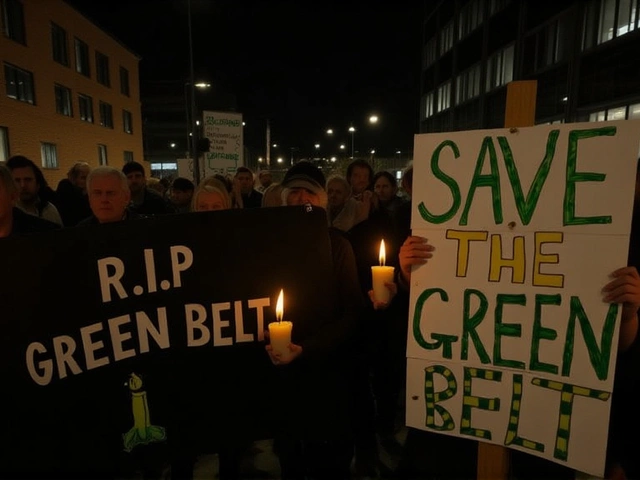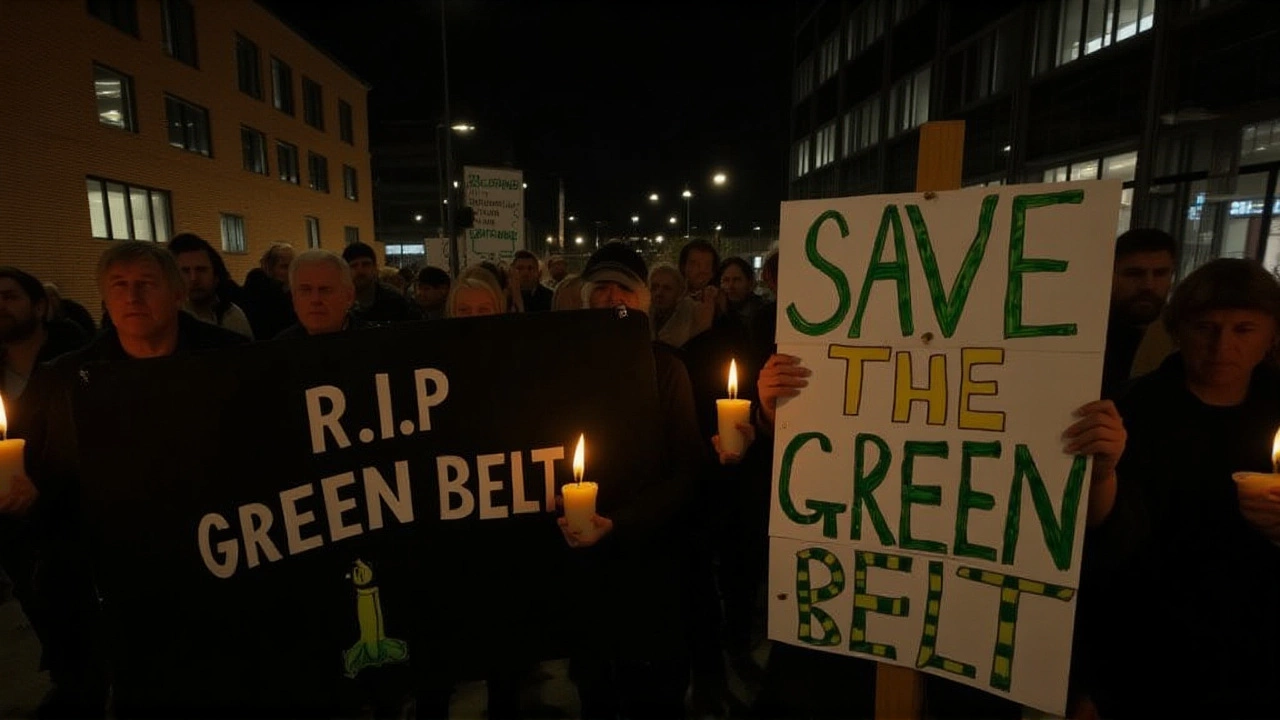
On Saturday, 10 October 2025, Sevenoaks District Council released its long-awaited Stage 1 Green Belt Assessment, a 25-page technical report prepared by Ove Arup & Partners Limited. The document, available on the council’s official website at sevenoaks.gov.uk, marks the first formal step in a process that could reshape land use across one of England’s most protected rural landscapes. The report’s repeated reference to "Parcel 2" on page 25 suggests this small patch of land — though its exact location remains undisclosed — may hold outsized significance in the coming debate over housing, conservation, and development pressure in Kent.
Why This Matters to Every Resident in Southeast England
The Green Belt isn’t just a policy. It’s a physical barrier. Around London, it’s the difference between sprawling suburbs and open fields, between quiet villages and endless housing estates. Sevenoaks District, with 79.6% of its land designated as Green Belt — one of the highest proportions in the country — is at the epicenter of a national tension. Kent County is legally required to deliver over 100,000 new homes by 2039. But Sevenoaks, already one of the most densely protected areas in England, has little room to grow. This report isn’t about building more houses. Not yet. It’s about asking: Where, if anywhere, can we build without breaking the rules?The Players Behind the Report
Sevenoaks District Council, led by Council Leader Chris Cramer, operates from Argyle House on London Road in the town of Sevenoaks, serving 124,000 residents across 128 square miles. Its Planning Policy Team, headed by Mark Stockdale, commissioned the assessment under Section 22 of the Planning and Compulsory Purchase Act 2004 — a legal requirement to review Green Belt boundaries every five years. The council didn’t do the work itself. It hired Ove Arup & Partners Limited, the global engineering giant founded by Sir Ove Arup in 1946 and now led by CEO Njoki Gitahi. Arup’s fingerprints are on some of Britain’s most iconic projects: the London 2012 Olympic Park, Heathrow Terminal 5, the Shard. Their involvement signals seriousness. This isn’t a box-ticking exercise. It’s a deep technical dive.Why hire an external firm? Because independence matters. The Royal Town Planning Institute expects local authorities to use neutral experts when weighing environmental trade-offs. Arup’s team likely analyzed soil quality, flood risk, biodiversity corridors, and visual impact — all factors that determine whether a parcel of land can be released from Green Belt status. The report’s structure, with "Parcel 2" appearing as a recurring footer, suggests it’s being treated as a potential candidate site. But what makes Parcel 2 special? Is it a small gap in the belt? A disused quarry? A patch of land with poor ecological value? We don’t know yet. That’s the point of Stage 2.
What Stage 1 Actually Means
"Stage 1" is the screening phase. Think of it like a medical triage. The council and Arup didn’t go out and survey every inch of Green Belt. They didn’t interview landowners. They didn’t hold public meetings. They looked at existing data — maps, satellite imagery, historical planning decisions — and flagged areas that might warrant further scrutiny. The fact that Parcel 2 is mentioned twice in the same context implies it met at least one threshold: perhaps it’s adjacent to a road, near a settlement boundary, or lacks protected species. It’s not a recommendation to build. It’s a recommendation to look closer.Stage 2, whenever it comes, will be the real fight. That’s when ecological surveys, landscape character assessments, and public consultations kick in. That’s when residents will line up to speak at council meetings. That’s when developers will start circling. And that’s when the council will have to choose: protect the countryside, or make room for families who can’t afford to live here anymore.
The Bigger Picture: Kent’s Housing Crisis
Kent County Council must find homes for 100,125 people by 2039. That’s roughly 5,000 new homes per year. Sevenoaks District alone has seen population growth of 8% since 2011. Many of those new residents are young families priced out of London. Others are retirees seeking quieter life. But the land they need is legally protected. The Green Belt was created in 1955 to stop London’s sprawl. Now, it’s becoming a wall around a city that’s already spilled over its borders. The National Planning Policy Framework says Green Belt boundaries must be "justified and reviewed." It doesn’t say they can’t change. But changing them requires overwhelming evidence — and political courage.Sevenoaks isn’t alone. Similar assessments are underway in Surrey, Hertfordshire, and Buckinghamshire. But few districts have as much land locked up as Sevenoaks. In 2023, the council’s own spatial data showed that just 11% of the district is available for development — and much of that is already built on. The pressure isn’t theoretical. It’s in the waiting lists for social housing. In the 15-year commutes. In the empty storefronts in Tonbridge because workers can’t afford to live nearby.
What Comes Next
The council has not released a timeline for Stage 2. That’s concerning. In other districts, delays of 18 to 24 months are common. But with housing targets looming, residents are watching. The next move will likely come from the Planning Policy Team, which will review Arup’s findings internally before deciding whether to proceed. If they do, expect a public consultation by mid-2026. If they don’t, the Green Belt will remain untouched — but so will the housing crisis.One thing is clear: Parcel 2 won’t be the last parcel named. More will emerge. And when they do, the debate will shift from abstract policy to real land — real trees, real fields, real homes.
Frequently Asked Questions
What is Parcel 2, and why is it so important?
Parcel 2 is a specific piece of land referenced on page 25 of the Green Belt assessment, but its exact location, size, and ownership are not disclosed. Its repeated mention suggests it meets certain technical criteria — possibly proximity to infrastructure, low ecological value, or boundary proximity — making it a candidate for further study. It’s not a proposed development site yet, but it’s the first named area that could be reconsidered under planning law.
Can Sevenoaks District Council legally remove land from the Green Belt?
Yes, but only under strict conditions outlined in the National Planning Policy Framework. The council must prove that the release is necessary to meet housing needs, that no alternative sites exist, and that the environmental impact is minimized. Even then, such decisions face legal challenges. Only a handful of Green Belt releases have been approved in England since 2015, and most were in areas with far less protection than Sevenoaks.
Why did Sevenoaks hire Ove Arup & Partners instead of using its own planners?
Hiring an external consultant like Arup ensures technical independence and credibility. Green Belt reviews require complex analysis of ecology, hydrology, and landscape impact — areas where local planning teams may lack specialized expertise. Arup’s track record with major infrastructure projects adds weight to the findings. It also shields the council from accusations of bias, especially as public scrutiny intensifies.
When will the public get to weigh in?
No official date has been set, but Stage 2 — the public consultation phase — is expected in 2026 if the council proceeds. The process typically involves online surveys, drop-in events in Sevenoaks and Tonbridge, and formal submissions. Residents should monitor the council’s planning portal closely. Early feedback often shapes which parcels move forward — or get taken off the table entirely.
How does this affect housing prices in Sevenoaks?
The assessment itself won’t change prices immediately. But if Parcel 2 or similar sites are later approved for development, it could ease long-term pressure on the housing market by increasing supply. Conversely, if no land is released, prices may continue rising as demand outpaces availability — especially for first-time buyers priced out of London. The outcome could determine whether Sevenoaks becomes more inclusive or more exclusive.
What happens if the council decides not to release any Green Belt land?
The council would still need to meet its housing targets — meaning it would have to intensify development on already-built land: higher-density housing, brownfield sites, or conversions. But with only 11% of the district available for development, options are limited. This could lead to taller buildings in town centers, more conversions of farms or schools, or even legal action from the government for failing to deliver enough homes.